
The Epigenetic Diet is Suzan Raad’s book about the most practical question in all of her work: what should you actually put on your plate? If your genes respond to the signals you send your body, then food is one of the loudest signals of all — and the Epigenetic Diet is about learning to use it on purpose rather than by accident.
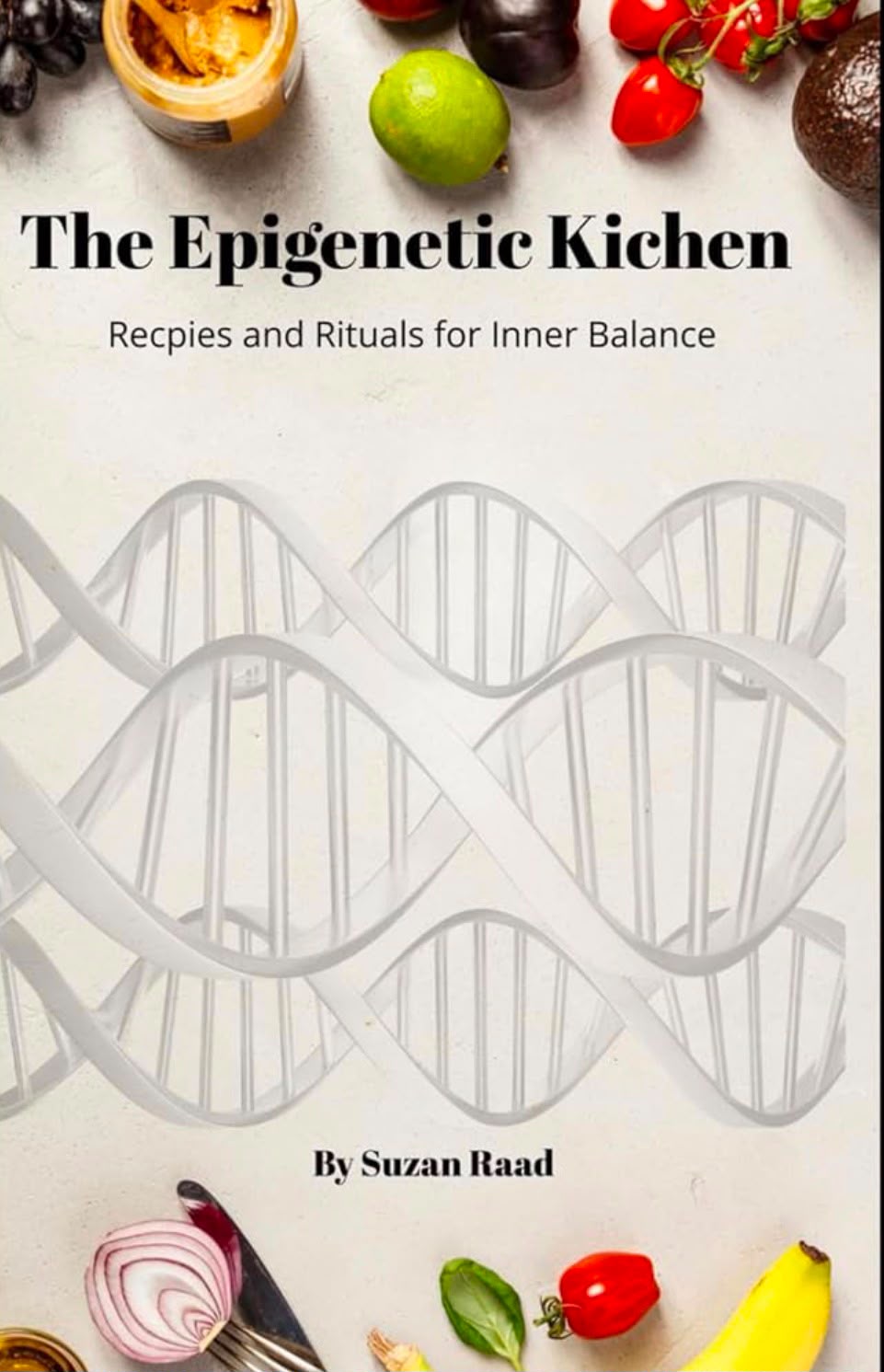
We are used to thinking about food as calories and fuel. The Epigenetic Diet asks you to see it differently: as information your body reads and acts on. Every meal carries instructions — nutrients, timing and patterns — that influence which of your genes are switched on and which stay quiet. This is the practical edge of epigenetics. Eating well, in this view, is not about punishment or restriction; it is about sending your body clearer, better signals.
This is not a fourteen-day fix or a list of forbidden foods. The Epigenetic Diet is built around consistency — the everyday choices that, repeated over months and years, shape how your body expresses its own DNA. It focuses on whole ingredients, on how and when you eat, and on the quiet power of small, sustainable habits over the dramatic short-term diets that rarely last beyond a few weeks.
Most diets treat everyone the same and aim only at the number on the scale. The Epigenetic Diet starts somewhere different: the goal is not just a smaller body but a body that works well because it is receiving the right signals. When you eat in a way your biology can read clearly, energy, weight and long-term health tend to follow — not as the target you chase, but as the natural result of the way you are eating.
You do not need to be a nutritionist or a scientist to use it. The Epigenetic Diet is written for anyone tired of conflicting advice who wants a clear, science-grounded way to think about food and their own genes. It is practical and readable, and it is designed to fit a real life with a real kitchen rather than a laboratory or a strict meal-prep regime.
The Epigenetic Diet sits alongside Suzan Raad’s other books. Epigenix explains the science of gene expression, Epigenetic Awakening looks at the role of the mind, and Back to Babylon traces how people ate long before modern food. Together they build one argument from different angles — that the science of gene expression belongs in the kitchen as much as the lab. The Epigenetic Diet is where that argument meets your plate.
If you have ever felt lost in the noise of diet culture and wanted something steadier, the Epigenetic Diet offers a calmer, more grounded way forward — one built not on willpower and restriction, but on understanding what your food is really telling your body, meal after meal, day after day.
In practice, the Epigenetic Diet is less about counting and more about noticing. It encourages you to pay attention to how different foods leave you feeling, to favour ingredients your body recognises, and to build a handful of reliable meals you can return to. Over time these small, repeated choices become the everyday signals that keep your genes working in your favour — a simple, sustainable foundation rather than another demanding plan to fail at.
For recipes that put these ideas into practice, see the Back to Babylon Cookbook, a companion collection of everyday dishes rooted in whole, gene-nourishing foods.